

Introduction
Search engines are changing rapidly. Today, users are no longer only clicking on Google search results — they are getting direct answers from AI tools like Google AI Overviews, ChatGPT, Gemini, and Perplexity. Businesses that want to improve visibility in this new search era can also learn about AI search optimization strategies based on Generative Engine Optimization (GEO).
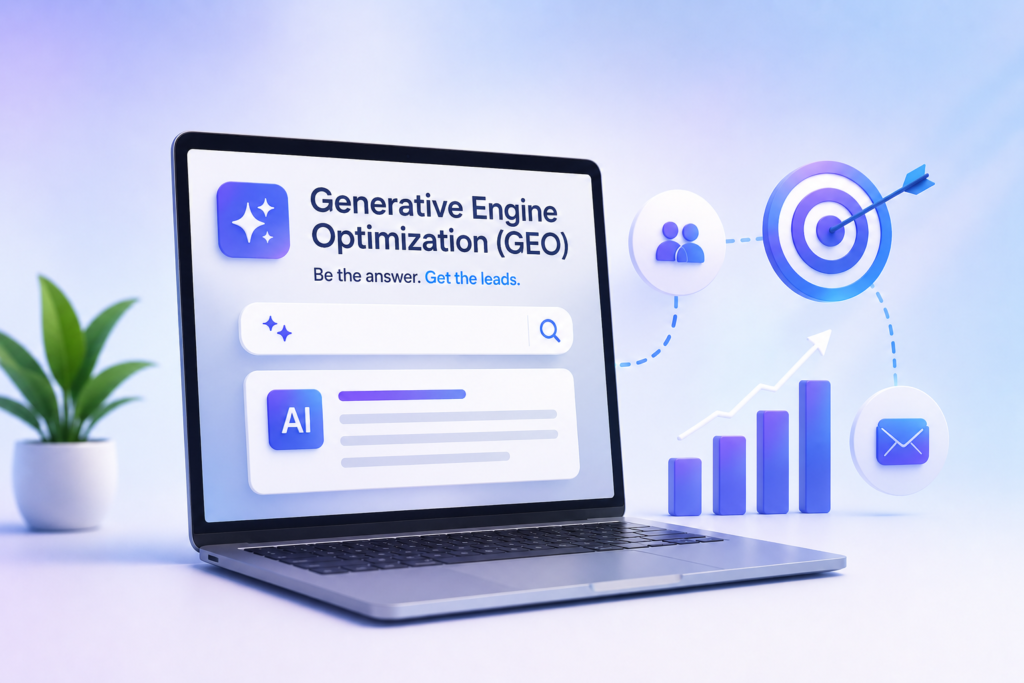
This shift has created a new digital marketing approach called Generative Engine Optimization (GEO).
GEO helps businesses optimize their website and content so that AI-powered search engines can understand, trust, and cite them in generated answers.
For businesses, this is not just an SEO update — it is a new way to generate leads, visibility, and brand authority online.
What Is Generative Engine Optimization (GEO)?
Generative Engine Optimization (GEO) is the process of optimizing your website content so that AI search engines can use it when generating answers for users.
Instead of focusing only on ranking in Google search results, GEO focuses on:
- Getting your content cited in AI-generated answers
- Increasing brand visibility inside AI Overviews
- Becoming a trusted source for AI systems
- Driving qualified leads from AI search platforms
In simple terms:
SEO helps you rank on Google.
GEO helps you get recommended by AI systems.
Why GEO Matters for Businesses in 2026
AI search is already changing how customers discover businesses.
Instead of browsing multiple websites, users now ask questions like:
- Which is the best digital marketing agency near me?
- How much does SEO cost in India?
- What is the best way to run Google Ads?
AI systems directly answer these queries — and often suggest a few trusted businesses.
If your business is not included in those answers, you lose visibility and potential customers.
How AI Search (Google AI Overviews, ChatGPT, Gemini) Works
AI search engines do not rank websites like traditional Google search.
Instead, they:
- Scan multiple trusted sources
- Extract useful and relevant information
- Combine it into a single answer
- Show citations or references from selected websites
To get featured, your website must:
- Be easy to understand
- Provide clear answers
- Show authority in your niche
- Cover topics in depth
GEO vs SEO: What’s the Difference?
| SEO | GEO |
|---|---|
| Focuses on Google rankings | Focuses on AI-generated answers |
| Depends on keywords & backlinks | Depends on content clarity & authority |
| Goal is traffic | Goal is visibility + citations |
| Optimizes webpages | Optimizes answers & knowledge |
Both are important — but GEO is becoming essential for future visibility. To understand how GEO principles are applied in real search visibility strategies, read our detailed guide on How to Rank in Google AI Overviews in 2026.
How GEO Helps Businesses Get More Leads
When your website appears in AI-generated answers:
- Users trust your brand faster
- You get higher-quality leads
- Your business gains instant authority
- Conversion rates improve
For example:
If someone asks:
“Best digital marketing company in Delhi”
and AI includes your brand in the answer — you get direct leads without them even visiting multiple websites.
Key Factors That Help You Rank in AI Search
1. High-Quality Content
Content must clearly explain topics and solve user problems.
2. EEAT (Experience, Expertise, Authority, Trust)
Websites with strong credibility are more likely to be cited.
3. Structured Content
Use headings, bullet points, and FAQs for better AI understanding.
4. Topical Authority
Publishing multiple related blogs builds subject expertise.
5. Clear Answers
AI prefers content that directly answers questions.
How to Optimize Your Website for GEO
1. Create Topic Clusters
Example:
- GEO Main Page
- AI Overviews Blog
- EEAT Guide
- ChatGPT Ranking Factors
- Local SEO + AI Search
2. Use Question-Based Content
Write blogs like:
- How does AI search work?
- How to rank in Google AI Overviews?
- Why some websites get cited in AI answers?
3. Improve Service Pages
Your service pages (SEO, PPC, Local SEO) should:
- Answer customer queries clearly
- Include FAQs
- Be well structured
- Include trust signals
4. Add Internal Linking
Link between:
- GEO blog → SEO services page
- AI Overviews blog → PPC services page
- EEAT blog → About Us page
This helps both users and search engines understand your expertise.
How Needle Ads Helps Businesses with GEO & AI Search
At Needle Ads Technologies, we help businesses adapt to the future of search by combining:
- SEO strategies
- Google Ads optimization
- Local SEO growth
- AI Search optimization (GEO)
- Conversion-focused website design
We focus on building visibility not just in Google search — but also in AI-powered search engines.
Who Should Focus on GEO?
GEO is important for:
- Local businesses
- Service-based companies
- Startups
- E-commerce brands
- Agencies
- Consultants
If your customers search online before buying, GEO matters for your business.
Conclusion
Generative Engine Optimization (GEO) is the next evolution of SEO. As AI search becomes more popular, businesses that optimize early will dominate visibility, leads, and brand authority. Instead of focusing only on rankings, the future belongs to businesses that become trusted sources for AI-generated answers. Needle Ads helps businesses stay ahead of this shift with modern SEO and AI-driven digital marketing strategies.
Frequently Asked Questions
What is Generative Engine Optimization (GEO)?
GEO is the process of optimizing content so that AI search engines can cite it in generated answers.
Is GEO replacing SEO?
No. GEO works alongside SEO to improve visibility in AI-driven search systems.
How does GEO help businesses?
It increases visibility in AI answers, builds authority, and generates more leads.
Can small businesses benefit from GEO?
Yes. Local businesses can gain strong visibility in AI-generated search results.